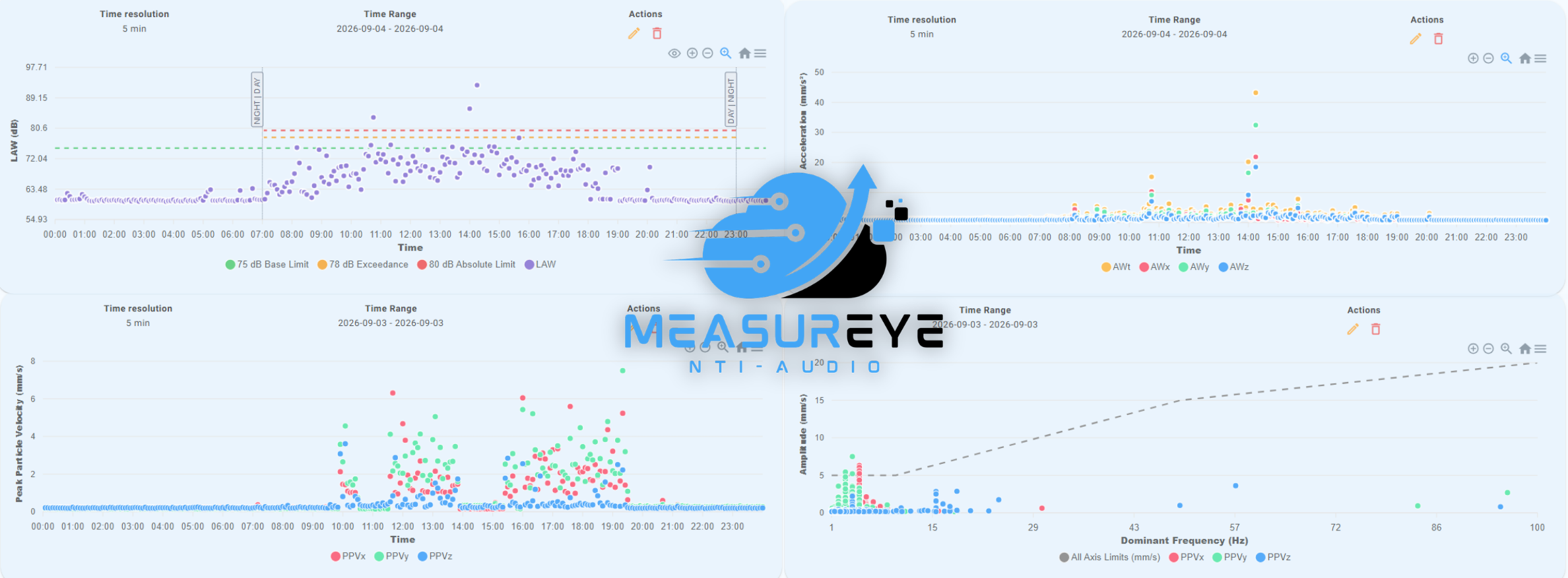
Vibration Monitoring

Overview
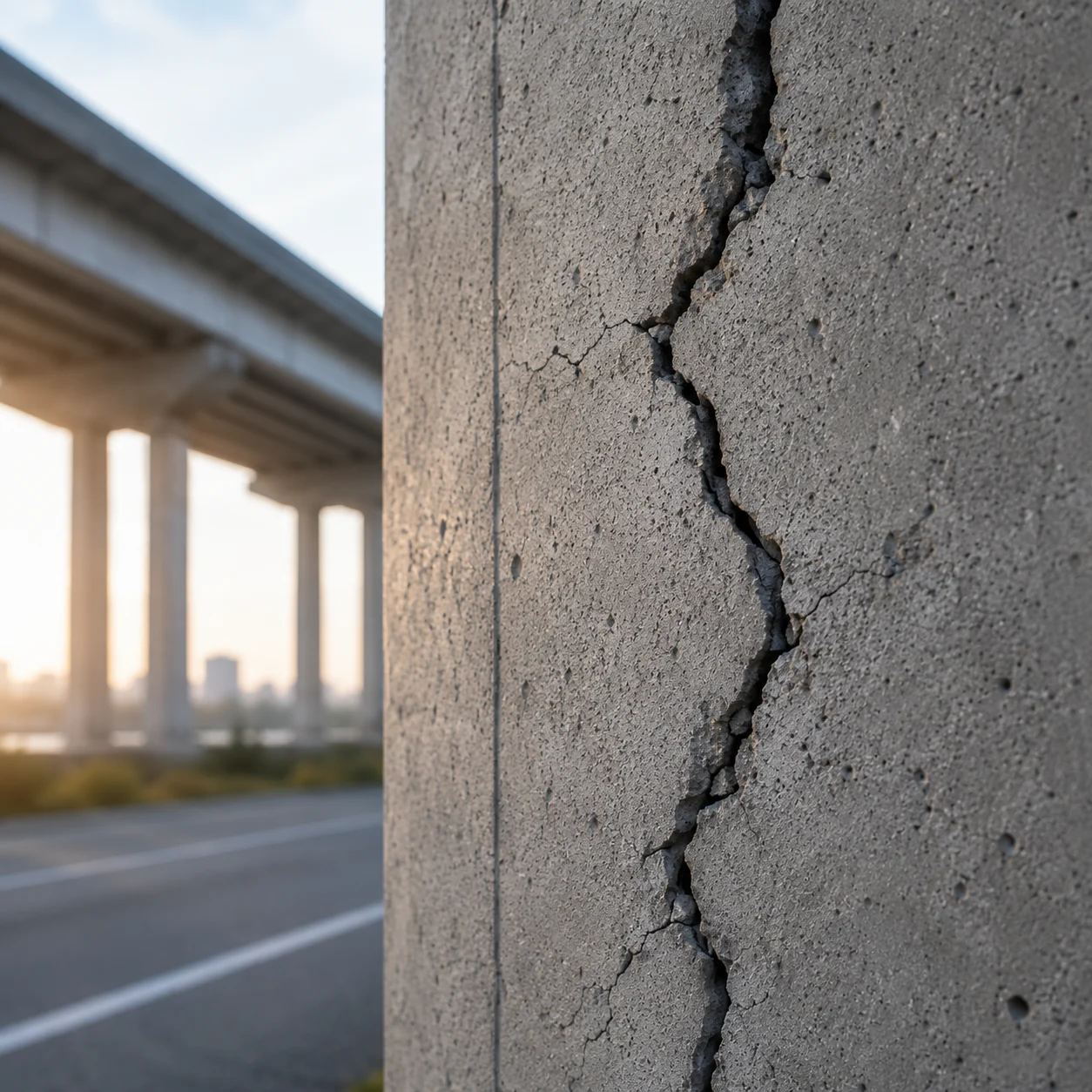
When there is an extraordinary source of vibrations, such as a nearby construction site or adverse windy conditions, it is important to measure vibrations in structures, such as buildings and bridges, or on the ground. The reason is to ensure, at the least, that the vibrations do not cause discomfort to people in the vicinity and, more critically, do not damage the structure.
While every structure vibrates to a certain degree, limits should be monitored to ensure the integrity of the material used in the construction, as well as the well-being of people. Given these safety and comfort considerations, many countries have regulations and standards that define these vibration limits in different environments.
Structural vibration is defined by mechanical particle oscillations. These are measured in three perpendicular directions.
Vibration affects three distinct things, each requiring its own assessment: the building’s occupants (comfort and safety), the building’s contents (sensitive equipment and instruments), and the building’s structure itself (cosmetic or structural damage).

Three things vibration can affect
Protect structural integrity
Prevent permanent damage to buildings, bridges and critical infrastructure from excessive mechanical stress and construction activity.
Safeguard occupant comfort
Keep vibration within the limits defined by international standards and regulations for human comfort and safety.

Preserve sensitive equipment
Protect precision machinery, medical devices and research equipment from vibration-induced degradation and premature failure.

Why Monitor Structural Vibrations?
Uncontrolled construction vibration is not just a technical curiosity – it carries real project risk.
Risk Management
Excessive vibration can lead to property damage, litigation, project delays, and increased costs.
Regulatory Compliance
Documented data supports demolition, shoring, and excavation permits.
Community Relations
Shareable data reassures neighbors and reduces complaints before they escalate.
Legal Defense
A documented vibration record helps resolve damage claims and disputes.
Public Safety
Keeping vibration within safe limits reduces risk to workers and the public.

Where are Structural Vibrations measured?
Vibrations are measured across a wide range of environments, depending on what’s being protected – the structure itself, the people inside it, or sensitive equipment nearby:
Structural Integrity
Measuring PPV and dominant frequency against structural damage thresholds (e.g. DIN 4150-3), in environments such as:
Construction Sites
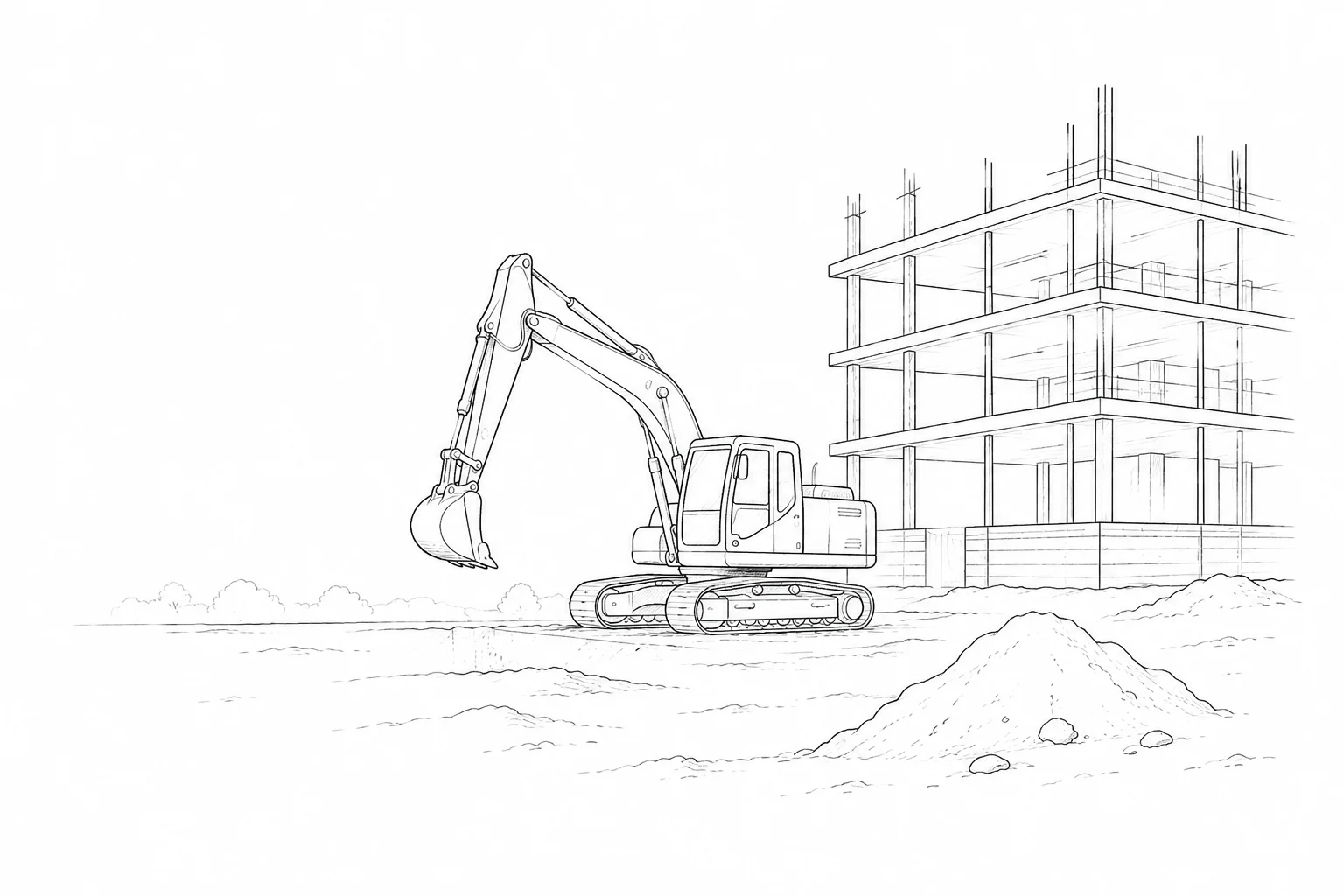
Heavy machinery operations on construction sites, particularly excavation, pile driving, vibratory compacting, demolition, and movement of tracked equipment, will produce ground-borne vibrations, which can damage buildings in the neighborhood. Also disturbances to people during working and/or after hours may need to be regulated.
The activities that generate the most vibration are consistent across sources: clearing and demolition, foundation compaction, and deep-foundation work such as excavation, pile driving, and drilling. Continuous vibration sources carry more damage potential than short, transient events.
Blasting
Minimize the impact of activities on the surrounding environment, nearby communities, and safety of the workers, during blasting operations in the mining industry.
Ground vibration from blasting is typically assessed against DIN 4150-3, AS 2187.2, and USBM RI8507 — the same standards used to evaluate construction-vibration impact on nearby structures, applied to a mining or quarry context.
Rail and Road
At peak traffic times, building and ground vibration tracking may be necessary to ensure the comfort of residents in the neighborhood.
Tunnelling
The vibration generated during the construction of subway tunnels with a tunnel boring machine has a significant impact on the environment, particularly under a city. It is critical to monitor the foundation works above the tunnel.
Bridges
Structural responses to extreme natural and man-made events, as well as an increasing volume of users and vehicle sizes, can lead to the sudden damage and collapse of bridge structures. Continuous or periodic assessment of the condition and performance is crucial in preventing bridge collapses.
Long-term bridge monitoring typically places sensors at the foundation and at points of interest across the span, so that both extreme-event triggered recordings and ongoing modal analysis — tracking natural frequency shifts that can signal fatigue or corrosion — are possible from the same installation.
Occupant Comfort
Measuring human-perceived vibration exposure indoors against international comfort and safety standards (e.g. BS 6472, ISO 2631, DIN 4150-2), in places such as:
Residential Buildings Near Construction
Homes adjacent to construction, demolition, or piling sites are exposed to ground-borne vibration that residents can perceive well below levels that would cause structural damage. Monitoring here focuses on VDV and KBFT thresholds to manage complaints and demonstrate compliance to neighbors and regulators.
Offices and Workplaces
Open-plan offices near transit lines, HVAC plant, or nearby building works can experience low-level vibration that affects concentration and perceived comfort, even when structurally harmless. Continuous monitoring helps distinguish nuisance vibration from genuine risk.
Schools
Classrooms near roadworks, rail corridors, or construction activity are monitored to keep vibration exposure within comfort limits during teaching hours, supporting both wellbeing and local authority compliance requirements.
Hospitals (Patient Comfort)
Beyond protecting sensitive medical equipment, hospital wards and patient rooms are monitored for occupant comfort — vibration from nearby traffic, construction, or building services can affect patient rest and recovery.
Hotels and Residential Towers Near Rail Lines
Tall residential and hospitality buildings close to rail corridors can experience amplified vibration at upper floors. Long-term comfort monitoring supports design validation and ongoing tenant or guest satisfaction.
Historic Buildings and Heritage Sites (Visitor Comfort)
Heritage buildings open to the public are monitored both to protect fragile fabric and to ensure visitor comfort during nearby events, footfall, or adjacent construction, balancing preservation with everyday use.
Sensitive Equipment
Measuring precision vibration levels against VC-curve or equivalent limits protecting delicate equipment, in places such as:
Hospitals (MRI, Surgical Suites)
Imaging equipment such as MRI and CT scanners, along with surgical microscopes and robotic systems, require extremely low vibration environments. Monitoring verifies that nearby construction, foot traffic, or building services stay within VC-curve limits appropriate to the equipment.
Data Centers and Server Rooms
Vibration affects the read/write accuracy and long-term reliability of high-density hard drive arrays. Data centers monitor floor and rack-level vibration to protect uptime and hardware lifespan, particularly near HVAC plant or nearby construction.
Semiconductor Fabs and Cleanrooms
Photolithography and other nanometer-scale processes are highly sensitive to floor vibration. Continuous monitoring against strict VC-curve limits (often VC-D or better) protects yield and process accuracy.
Research Laboratories
Electron microscopes, precision balances, and other sensitive instruments require stable, low-vibration environments. Monitoring supports facility qualification and ongoing validation as surrounding activity changes.
Precision Manufacturing Facilities
Manufacturing processes involving fine tolerances — optics, precision machining, electronics assembly — depend on stable floors. Vibration monitoring helps identify and mitigate sources before they affect product quality.
Museums and Archives (Artifact Preservation)
Fragile artifacts, artworks, and archival materials can be damaged by cumulative vibration exposure from visitor footfall, transport, or nearby construction. Long-term monitoring supports conservation planning and display-case design.
5GV
The 5GV is a high-performance MEMS vibration and tilt monitor delivering exceptional precision, combined with an integrated 4G gateway (optional Wi-Fi). It is ideally suited for structural health monitoring, protection of occupants inside buildings, and safeguarding sensitive equipment.
Designed with ease of use in mind, the 5GV is simple to configure, quick to install, and can be fully managed remotely — significantly reducing the need for time-consuming on-site visits.
Its rechargeable battery base extends field autonomy without the need to replace primary cells, further reducing maintenance visits over long-term deployments.

How Vibration Monitoring Works
Establish a baseline
Record background vibration before work starts — sets realistic thresholds and documents pre-existing conditions
Position sensors
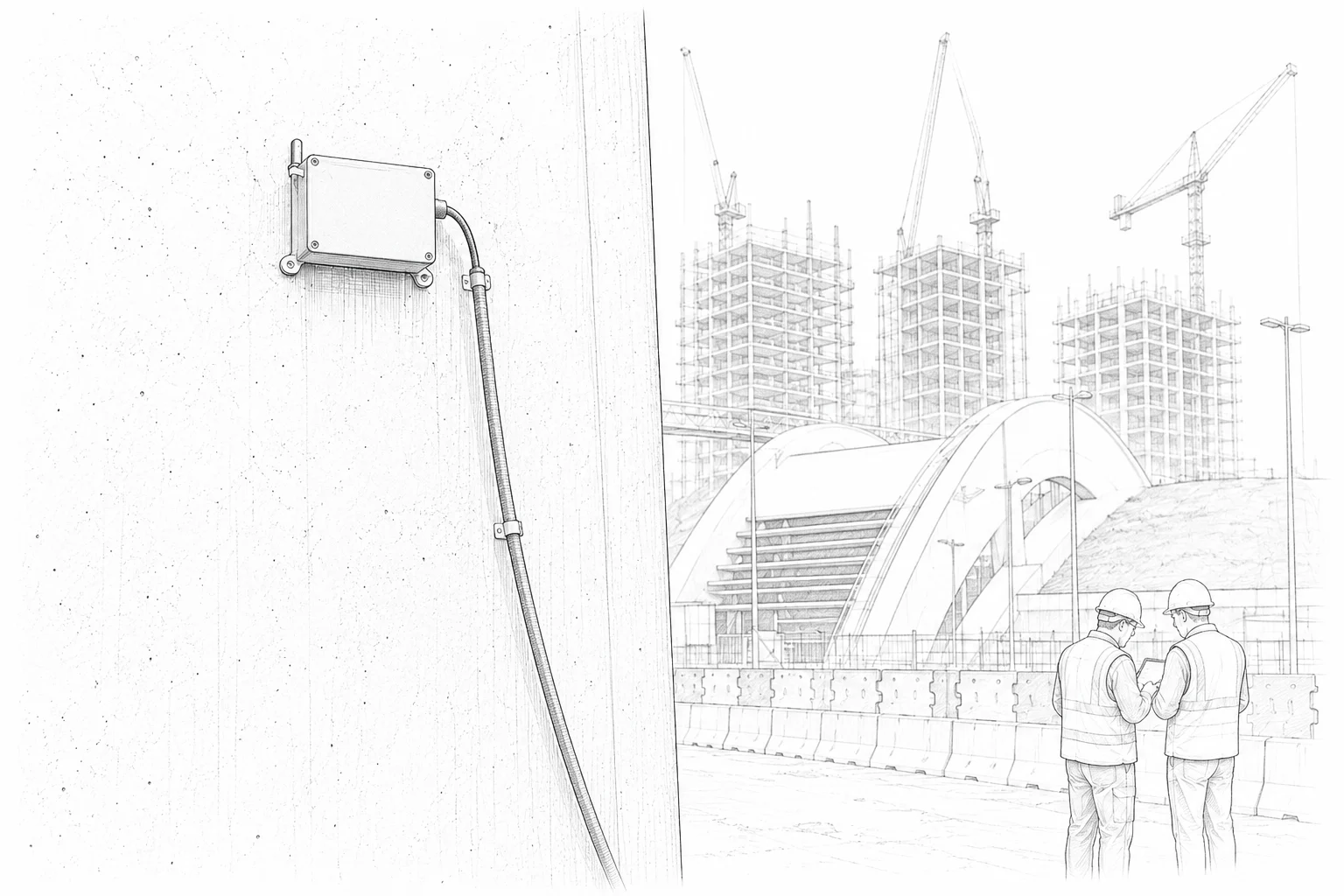
Place at foundations, load-bearing elements, or along the transmission path — placement should match the monitoring objective
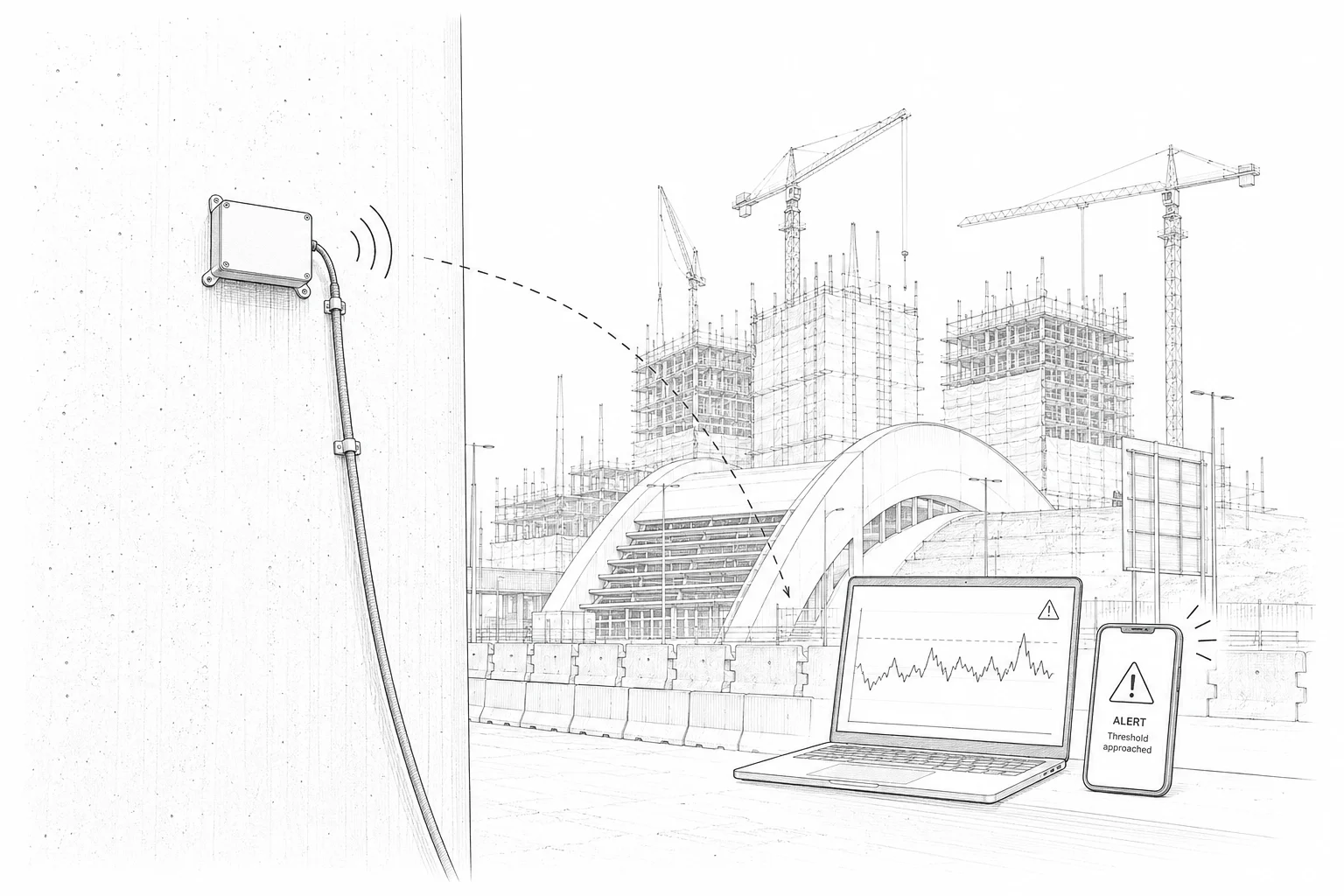
Monitor & alert
Sample continuously; send an immediate alert when a threshold is approached or exceeded
Report & share
Generate compliance reports automatically and share with regulators, engineers, and neighbors
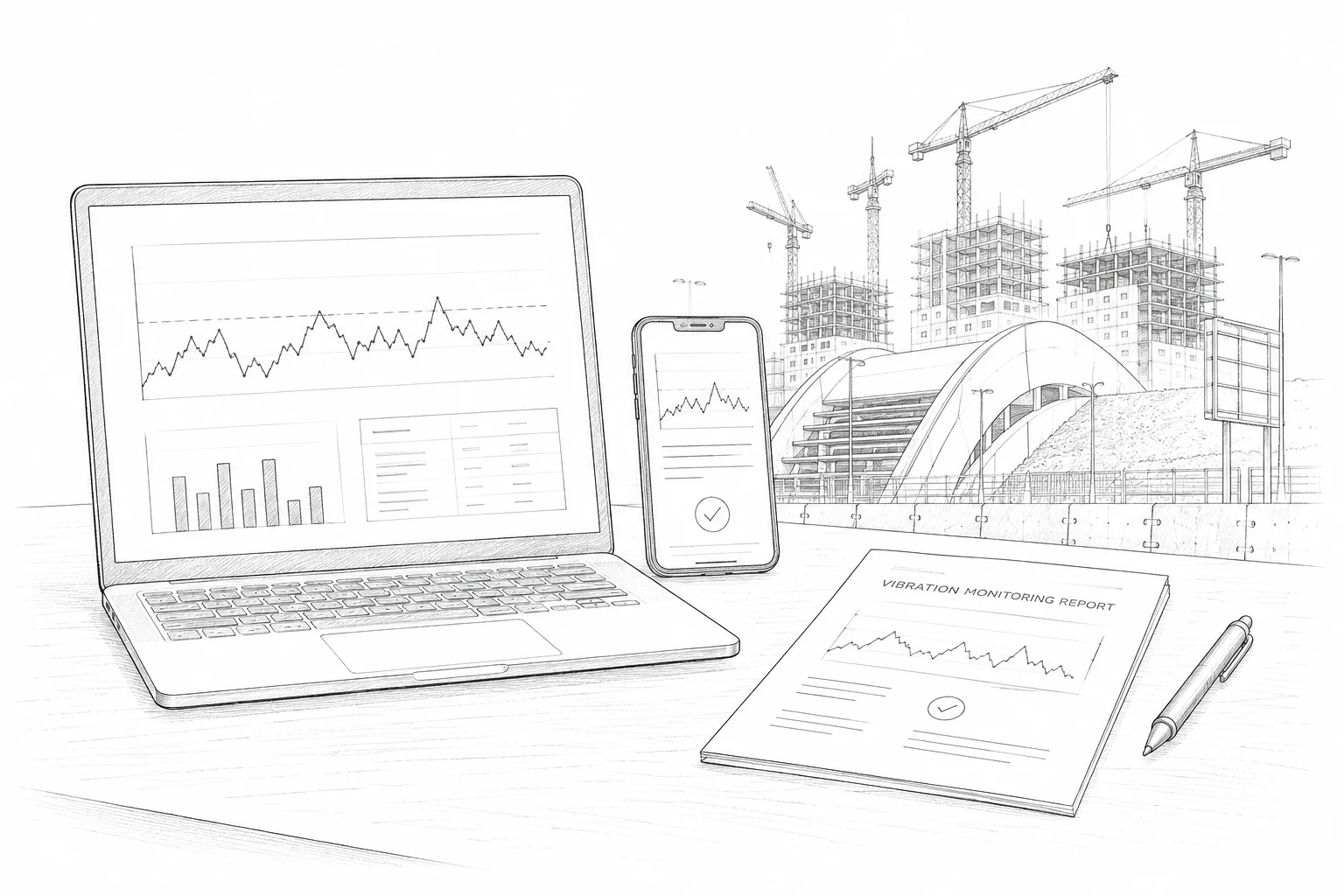

Our powerful cloud solution for monitoring and insights.
MeasurEyeWhich units are used to measure vibrations?
During vibration, particles within the structure oscillate. For each axis, the speed (velocity) at which the particles oscillate is calculated from the distance moved (displacement) over time.
Particle Velocity (v), measured in mm/s or in/s, is defined as
v = Δd / Δt
Δd → the particle displacement in millimeters or inches
Δt → the time in seconds
Structural Health Monitoring
PPV (Peak Particle Velocity)
The PPV is the most basic value used in vibration measurements. It indicates the greatest particle velocity over a period of time per axis. PPV is defined as the maximum absolute value of the unweighted signal.
PPV limits are frequency- and building-dependent. Under DIN 4150-3, for example, limits range from 20 – 50 mm/s for commercial/industrial buildings down to 3 – 10 mm/s for buildings of great intrinsic value, across the 1 – 100 Hz range — illustrating why a single PPV number is never enough on its own; it must always be read against frequency and building type.
PCPV (Peak Component Particle Velocity)
The PCPV is the maximum of the three PPVs in each axis direction:
PVS (Peak Vector Sum)
The PVS is the resulting velocity calculated by simultaneously considering the PPVs in all of the x, y, and z directions — the square root of the sum of squares of the PPV components:
DF (Dominant Frequency)
A vibration signal can be broken down into individual frequency components (using Zero Crossing or Fast Fourier Transform methods). The Dominant Frequency (DF) can reveal a change in a structure’s natural (resonant) frequency — proportional to its stiffness. A shift, for example in a steel structure, can indicate serious corrosion, which is why monitoring steel bridges for frequency shifts is valuable.
Zero Crossing (ZC) is the simplest method of frequency estimation: since an oscillation crosses the x-axis twice per cycle, counting crossings and dividing by two, then by the observation window size, gives the Dominant Frequency. This method works better with a few complete cycles, and accuracy improves with a longer observation window.
Occupant Comfort
KBFT / KBF (KB-Value)
KBF is a German metric (DIN 4150-2) derived by band-pass filtering the velocity signal to approximate human perception, then evaluating it as a running RMS value. Two key values are reported: KBFmax, the highest instantaneous KBF value in the assessment period, and KBFTm, its time-averaged equivalent — used together to judge both peak disturbance and sustained exposure.
AWt (Frequency-Weighted Acceleration)
AWt, per ISO 2631, is the frequency-weighted RMS acceleration combined across all three axes, reflecting the human body’s differing sensitivity to vibration frequency and direction.
1/3-Octave Spectrum
Rather than reducing a signal to a single number, the 1/3-octave spectrum breaks it into frequency bands (velocity, acceleration, and dBV), giving a fuller picture of where vibration energy is concentrated — useful when a single indicator like VDV or KBF doesn’t tell the whole story.
VDV (Vibration Dose Value)
VDV is a cumulative exposure metric defined in BS 6472. Rather than looking at a single peak, it integrates frequency-weighted acceleration over the full exposure period, so intermittent or repeated events are weighted more heavily than a single momentary peak — reflecting how humans actually perceive vibration over time.
where a(t) is the frequency-weighted acceleration and T is the total exposure period (typically a full day or night).
Comfort thresholds are standard- and use-case-dependent: BS 6472 sets VDV action values that differ for daytime/night-time and for residential vs. workplace settings, while DIN 4150-2 sets KBF limits by area type (e.g. purely residential vs. mixed-use). As with structural limits, a single reading is only meaningful when read against the applicable standard and building use.
Sensitive Equipment
VC Curves (Vibration Criterion)
VC curves define maximum permissible 1/3-octave-band RMS vibration velocity, typically across the 8 – 80 Hz range, for environments housing vibration-sensitive equipment. Each curve — VC-A through VC-E — represents a progressively stricter limit, matched to the sensitivity of the equipment being protected.
Lower-numbered/lettered curves permit more vibration; higher curves (towards VC-E) are reserved for the most sensitive processes, such as electron microscopy or nanometer-scale lithography.
Which VC curve applies depends entirely on the equipment being protected: general laboratory space might only require VC-A or VC-B, while semiconductor lithography tools or electron microscopes can demand VC-D or stricter. Facility design and ongoing monitoring both reference the same curve so that any drift toward the limit — from nearby construction, HVAC changes, or foot traffic — can be caught early.
News about Vibration Monitoring
- News & Updates•September 24, 2026
MeasurEye Vibration Mode: Structural Damage and Occupant Comfort Monitoring Now Live
Read more